
Loading...
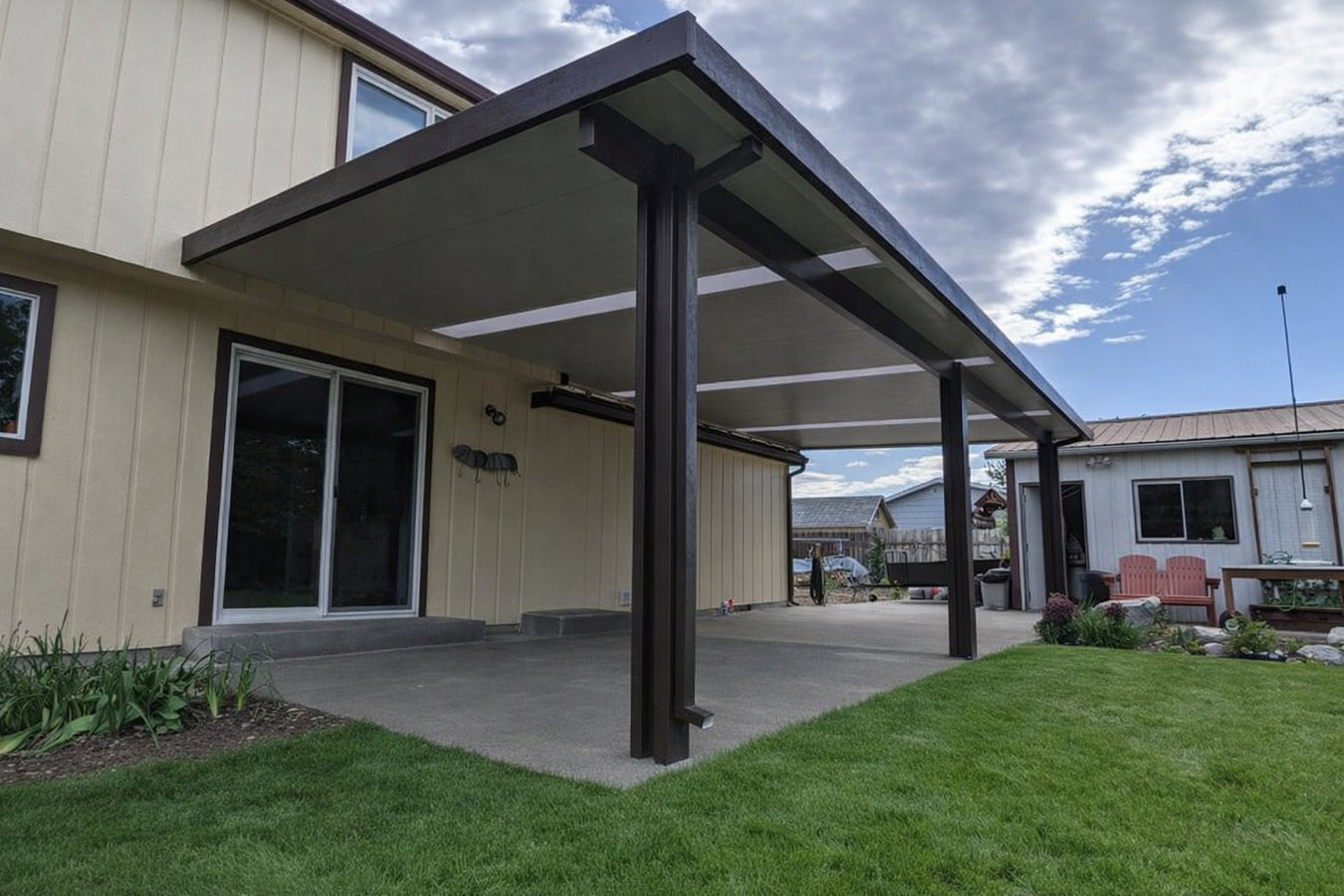
Lake Elsinore Sunrooms & Patios builds patio covers, patio enclosures, and insulated sunroom additions throughout Corona, CA, with designs built for the city's 100-degree summers, Santa Ana wind events, and the large inventory of 1980s-2000s tract homes that make up most of Corona's housing stock.
We handle City of Corona permits, understand the clay soil conditions that crack concrete across the Inland Empire, and have worked on homes from the hillside neighborhoods near Glen Ivy to the south-side communities around Dos Lagos.
Most Corona homes built between 1980 and 2005 have a concrete patio slab that sits fully exposed to the sun. Adding a properly engineered patio cover brings shade and partial weather protection to those exposed slabs while creating a foundation that can be fully enclosed later. In a city where summer temperatures regularly hit triple digits, a patio cover is often the first logical step toward making outdoor space actually usable.
Corona's 1980s and 1990s tract homes typically have a covered concrete patio that sits at the back of the house. Enclosing that existing covered space into a properly insulated room is the fastest way to add year-round livable square footage without a ground-up addition. The permit footprint is simpler than a new addition, and the existing slab and roof line keep the project scope - and the cost - manageable.
Corona summers are brutal, and a room with standard glass becomes a heat trap from June through September. A four-season sunroom built with insulated low-e glass and a dedicated mini-split handles both extremes - the 100-degree summer heat and the occasional cold winter morning. For Corona homeowners who want a space usable every month of the year, the four-season spec is the only build that delivers on that goal.
Lots in Corona's residential neighborhoods range from 6,000 to 10,000 square feet, which typically gives enough room for a rear sunroom addition without cramping the yard. Single-story homes built in the 1980s and early 1990s are structurally straightforward for an attached addition, and most already have the concrete slab and perimeter foundation that can serve as the addition's base. A sunroom addition gives Corona homeowners more interior square footage while directly connecting to the home's main living area.
The Inland Empire's intense UV index bleaches and chalks aluminum frames within a few years, and painted frames in Corona's heat require frequent touch-ups to avoid peeling and corrosion. Vinyl frames resist UV degradation and don't need repainting through decades of sun exposure. For Corona homeowners who want a sunroom that holds its appearance without recurring maintenance, vinyl framing is the practical choice in this climate.
Santa Ana wind events bring airborne dust and debris into outdoor spaces across Corona each fall and winter, and insects are active through much of the year given the mild temperatures. A screen room gives Corona homeowners a protected outdoor space that filters both, keeping the open-air feel while blocking what the wind and season bring. It is a lower-cost permitted option than a full enclosure for homeowners who want to use their patio year-round without going fully enclosed.
Corona sits at the western edge of the Inland Empire, right where the 91 freeway crosses from Orange County into Riverside County. The city grew fast during the suburban expansion of the 1980s and 1990s, and that boom left a large inventory of tract homes that are now 25 to 40 years old. At that age, the original patio slabs have been through enough wet-dry cycles on clay soil that cracking and settling are common. The roofing underlayment on tile roofs from this era is often near or past its service life. And the caulk and sealants around windows and door frames dry out faster in the Inland Empire's intense sun and heat than most homeowners expect. Any contractor adding an enclosed room or patio cover to a home in this age range needs to assess the existing structure before quoting the job.
The Santa Ana winds that hit Corona each fall add a different kind of demand. These events bring hot, dry air at high speeds - gusts above 60 mph are not unusual - and they put real stress on anything attached to the outside of a home. A patio cover or sunroom enclosure that was engineered for standard wind loads will perform differently in a strong Santa Ana event than one that was specifically designed with local Riverside County wind conditions in mind. The National Weather Service issues wind advisories for the Inland Empire regularly, and those conditions should be part of every structural discussion before a permit application is filed.
Our crew works throughout Corona regularly, and we pull permits through the City of Corona Building Division for residential room additions and patio structures. Corona is a city we know from the freeway-adjacent neighborhoods near the 91 to the hillside communities above the city center, where sloped lots and drainage conditions require a different approach than flat suburban parcels.
The Dos Lagos area in south Corona and the neighborhoods near Glen Ivy Hot Springs along the base of the Santa Ana Mountains represent two different building environments. Homes near Dos Lagos tend to be newer planned-community construction with HOA guidelines that govern exterior materials and finishes. Homes higher in the hills often sit on sloped lots with drainage challenges that affect how a patio slab was originally poured and how water moves today. Both situations require a different set of questions at the assessment stage.
We also serve nearby Eastvale, just north of Corona along the 15 freeway, where a newer generation of tract homes with larger lots and bigger concrete footprints presents a different set of project conditions. And Norco, which borders Corona to the east, is another area we cover regularly - large-lot horse properties with a different set of site complexities.
Reach out by phone or through the estimate form on our site. Tell us your address, your current patio or outdoor space setup, and what you want to accomplish. We reply within 1 business day.
We visit your Corona property, inspect the slab or planned footprint, assess concrete condition, and note sun exposure and drainage. You receive a written itemized cost breakdown before any commitment. Any slab or foundation issues get identified here, not mid-project.
We prepare and file the permit application with the City of Corona Building Division under our license. We track the review, respond to plan check comments, and keep you updated on timing. Plan review in Corona typically takes three to six weeks after a complete application.
We complete all permitted phases from slab prep through framing, glazing, and finish work. City inspections occur at each required stage. At completion we walk you through the finished space and hand over all permit documentation and inspection records.
We serve all of Corona, CA. No sales pressure - just a written estimate you can review at your own pace.
(951) 508-0102Corona is one of the larger cities in Riverside County, sitting right on the border with Orange County along the 91 freeway corridor. The city drew a massive wave of families from Los Angeles and Orange County starting in the 1980s, attracted by lower home prices and more space. That growth produced large tracts of single-family homes - mostly stucco exteriors, tile roofs, two-car garages, and concrete driveways - that now make up the majority of Corona's residential neighborhoods. The city is largely owner-occupied, with long-term residents who invest in maintaining and upgrading their properties. For more background on the city, the Wikipedia entry for Corona, California provides a useful overview of its development and character.
The city is ringed by the Santa Ana Mountains to the west and rolling hills throughout its edges, giving many neighborhoods views and terrain that you do not find in flatter parts of the Inland Empire. South Corona around Dos Lagos has newer planned-community neighborhoods with HOA guidelines and newer construction. North and central Corona have older tracts from the 1980s and early 1990s where homes are hitting the age range for significant maintenance projects. We serve homeowners throughout the city, and we also work in neighboring Eastvale to the north, where a newer generation of large-lot homes presents a different project profile than Corona's older stock.
Bug-free outdoor living with professionally installed screen rooms.
Learn MoreWe serve all of Corona, CA. Reach out now for a written estimate before summer heat arrives and the schedule fills up.