Loading...
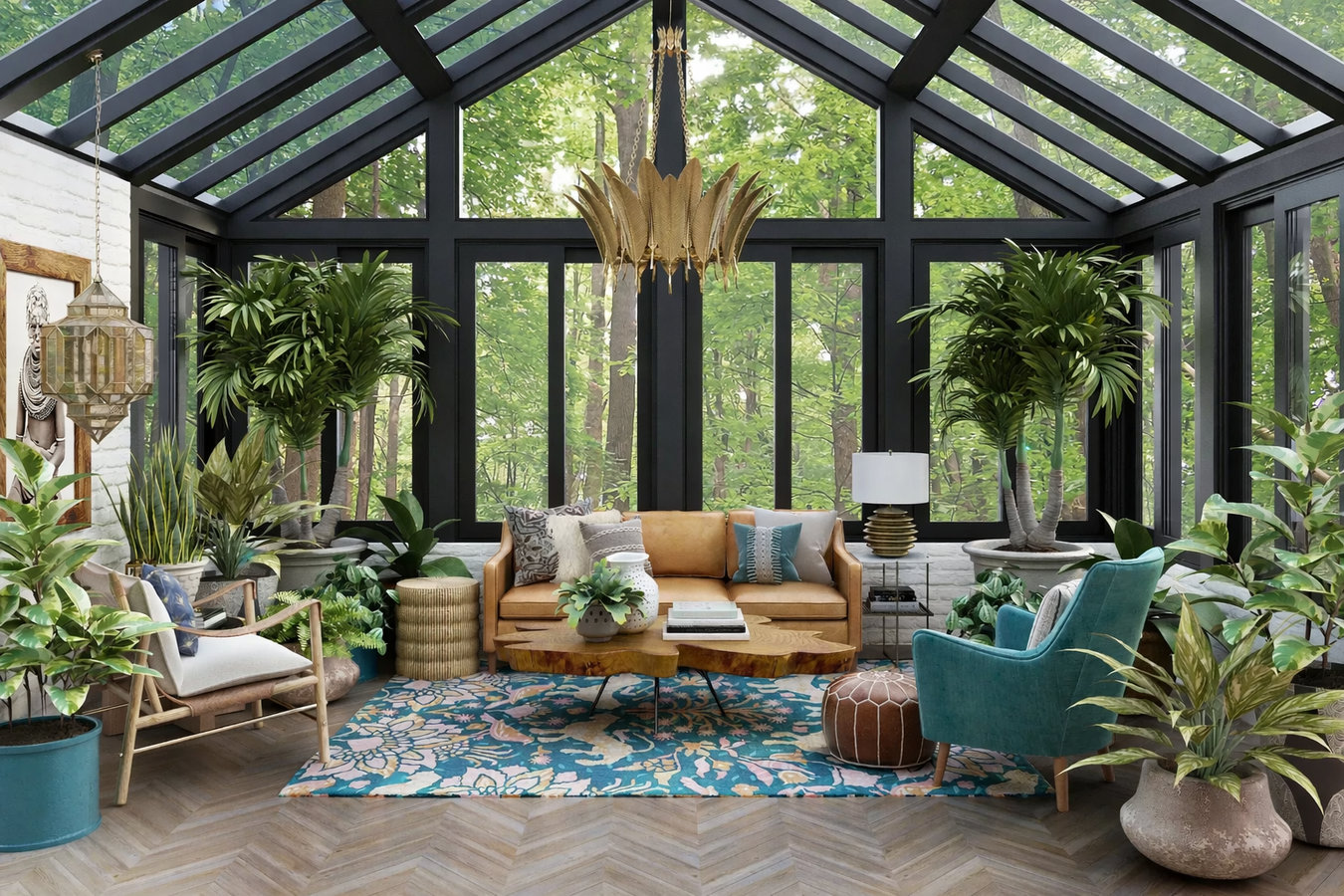
Lake Elsinore Sunrooms & Patios designs and builds custom sunrooms, patio enclosures, and all-season room additions throughout Eastvale, CA, sizing every project for the city's large two-story homes, managing HOA design review, and engineering each build for the Inland Empire's intense heat and clay soil conditions.
We pull permits through the City of Eastvale, understand the 2000s-era tract home construction common throughout the city, and have worked in neighborhoods from Hamner Avenue east to the newer tracts near the 15 freeway.
Eastvale homes are larger than average for Southern California, and the design phase matters more on a large property where the sunroom needs to look proportional to the main house. Professional sunroom design for an Eastvale home means working through glazing orientation relative to the Inland Empire sun angle, HOA material and color requirements, and the structural connection to a two-story home that may have different framing conditions than a single-story ranch. Getting this right before the permit application goes in saves time and avoids plan check comments.
Most Eastvale homes built in the 2000s and early 2010s have a concrete patio slab behind the house that already has the footprint for an enclosure. Converting that existing slab into a properly insulated room is faster and less expensive than a ground-up addition. The existing concrete and the home's rear wall framing provide the structural starting point, and the permit scope is simpler than a new addition because no new foundation work is needed.
Eastvale summers are intense, and the difference between a room that is usable year-round and one that sits empty from June through September comes down to glazing and HVAC spec. A four-season sunroom built with low-e insulated glass and a dedicated ductless mini-split handles Eastvale's 100-degree summer heat and mild winter mornings equally well. For homeowners who plan to use the space as a home office, gym, or family room every month of the year, the four-season spec is the only build that delivers on that use case.
Eastvale's high home values and owner-occupied neighborhoods mean homeowners here expect a sunroom that looks like it was designed for their specific house, not a kit dropped in the backyard. A custom sunroom on an Eastvale property addresses the lot size, the HOA design guidelines, the orientation of the home on the parcel, and the interior connection to the existing floor plan. The result integrates with the home's architecture rather than being visibly appended to it.
Eastvale's long dry season and intense UV exposure are hard on materials that were not designed for the Inland Empire climate. An all-season room built for this area uses low-e glass rated for California's Title 24 energy requirements, frames that resist UV degradation, and mechanical systems sized for the thermal load of an enclosed glass room in triple-digit heat. For families in Eastvale who want a comfortable space from January through December without relying on workarounds, an all-season build is the right specification.
The Inland Empire sun fades, chalks, and weakens painted aluminum frames faster than most homeowners in newer markets like Eastvale expect. Vinyl frames were built for this kind of UV exposure - they do not oxidize, they do not need repainting, and they hold their color through years of triple-digit summers. For Eastvale homeowners who want a sunroom that holds up and looks good without annual maintenance, vinyl framing is the practical long-term choice in this climate.
Eastvale became its own city in 2010, and almost all of its housing stock was built in the 2000s and early 2010s. These are large two-story tract homes - 2,500 to 4,000 square feet, stucco exteriors, concrete tile roofs, two- and three-car garages, and generous backyard slabs. The homes are newer than most of the Inland Empire's housing stock, but "newer" does not mean maintenance-free. Driveways and patios poured in 2005 or 2008 are now 15 to 20 years old and sitting on the same expansive clay soils that crack concrete throughout the region. Stucco exteriors exposed to 100-degree summers and occasional Santa Ana wind-driven debris develop hairline cracks that let moisture in. HVAC systems from that era are approaching the end of their service life. A contractor who works in Eastvale regularly understands what to expect when they pull up to a home built in this era.
The HOA dimension is also real in Eastvale. Many of the city's planned communities have architectural review committees that require pre-approval for any exterior addition - materials, colors, and design all go through the HOA before a permit application can be submitted to the City of Eastvale. A contractor who has not done this before can quote a job without flagging the HOA approval step, which creates timeline surprises when the homeowner finds out they need design review before the permit application can go in. We build that step into every Eastvale estimate from the start.
Our crew works throughout Eastvale regularly, and we pull permits through the City of Eastvale Community Development Department for residential room additions and patio structures. Eastvale is one of the newer cities we serve, incorporated in 2010, and the consistency of its housing stock - nearly all 2000s-era tract homes from major production builders - means we know what to expect on most job sites before we arrive.
The neighborhoods along Hamner Avenue and the tracts near Eastvale Community Park are some of the most active residential areas in the city. Homes near the 15/60 freeway interchange sit in the western part of the city, where the larger lots tend to have longer driveways and bigger concrete patio footprints - more concrete per property than you see in most of the Inland Empire. The clay soils under these properties behave the same way they do across the region: expanding with winter rains and shrinking in the summer dry season, which is why we include a slab condition check in every on-site estimate.
We also serve neighboring Corona, directly to the south, where a large inventory of older 1980s and 1990s homes presents different project conditions than Eastvale's newer stock. And Lake Elsinore is our home base - we bring the same permit knowledge and build standards to Eastvale that we have developed serving the broader Inland Empire region since 2017.
Reach out by phone or through the estimate form on our site. Tell us your address, your current patio or outdoor space setup, and what you want to accomplish. If your neighborhood has an HOA, let us know so we can factor their review timeline into the schedule from the start. We reply within 1 business day.
We visit your Eastvale property, inspect the slab or planned footprint, assess concrete condition and drainage, and note the room's sun exposure relative to the Inland Empire sun angle. You receive a written itemized cost breakdown. Slab condition, HOA requirements, and any structural considerations are all addressed here, before any commitment is made.
We prepare and file the permit application with the City of Eastvale Community Development Department under our license, and we provide the documentation you need for HOA review if your neighborhood requires it. We track both processes, respond to any comments, and keep you updated on timing. Permit review in Eastvale typically runs three to six weeks after a complete application.
We complete all permitted phases from slab prep through framing, glazing, and finish work. City inspections occur at each required stage. At completion we walk you through the finished space, confirm everything meets HOA requirements, and hand over all permit documentation and inspection records.
We serve all of Eastvale, CA, and handle both the city permit and HOA review. Get a written estimate at no cost.
(951) 508-0102Eastvale is one of the newest cities in California, incorporated in 2010 from an unincorporated area of western Riverside County. It sits near the junction of the 15 and 60 freeways, putting it within commuting distance of Ontario, Los Angeles, and other Inland Empire job centers. The city grew quickly in the 2000s as families looking for more space at lower prices than Orange County or Los Angeles settled here. The result is a city that is almost entirely single-family homes - large two-story tract houses on bigger lots than you find in most of Southern California. Median home values have climbed to the $600,000-$700,000 range, reflecting the demand from families who moved here for the schools, the space, and the quality of life. For more on Eastvale's background, see the Wikipedia entry for Eastvale, California.
The city is largely residential, with most commercial activity along Hamner Avenue and the surrounding corridors. Eastvale Community Park is the main gathering point for families across the city. The Corona-Norco Unified School District serves the area and is a major reason long-term families choose to stay. That stability translates into homeowners who invest in their properties rather than looking for the cheapest short-term fix. Our neighboring coverage areas include Corona to the south, where we work regularly on the older housing stock that predates Eastvale's development, and where many Eastvale families have ties through the shared school district and highway corridor.
Bug-free outdoor living with professionally installed screen rooms.
Learn MoreWe serve all of Eastvale, CA, and handle city permits and HOA review. Reach out now for a written estimate with no commitment required.